
Rubber Rollers Manufacturer & Supplier
Engineered with robust steel or aluminum cores and vulcanized with high-durability rubber compounds. Delivering non-slip grip, uniform contact pressure, and vibration absorption for printing, packaging, and conveyor lines.
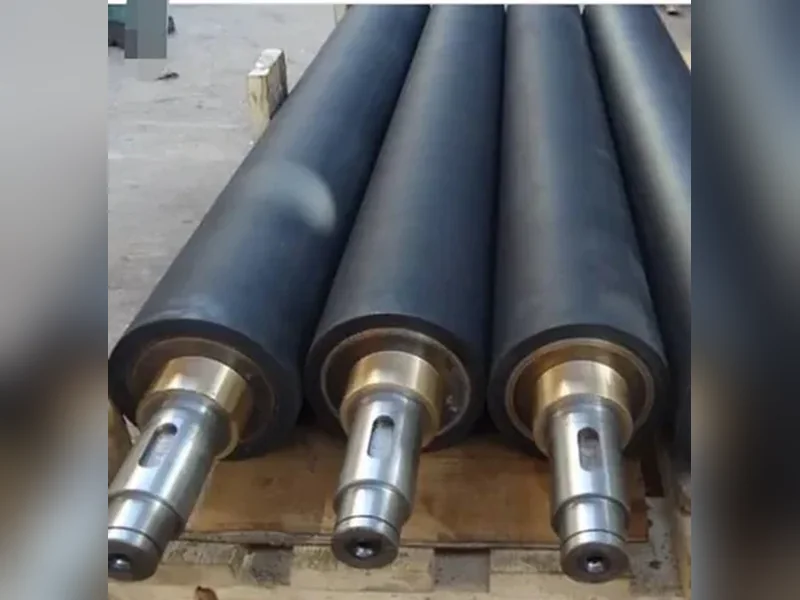
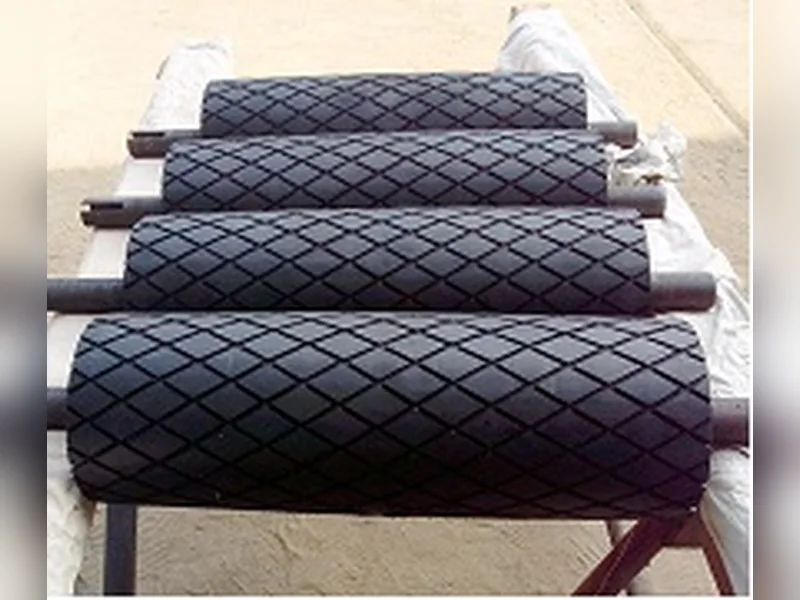
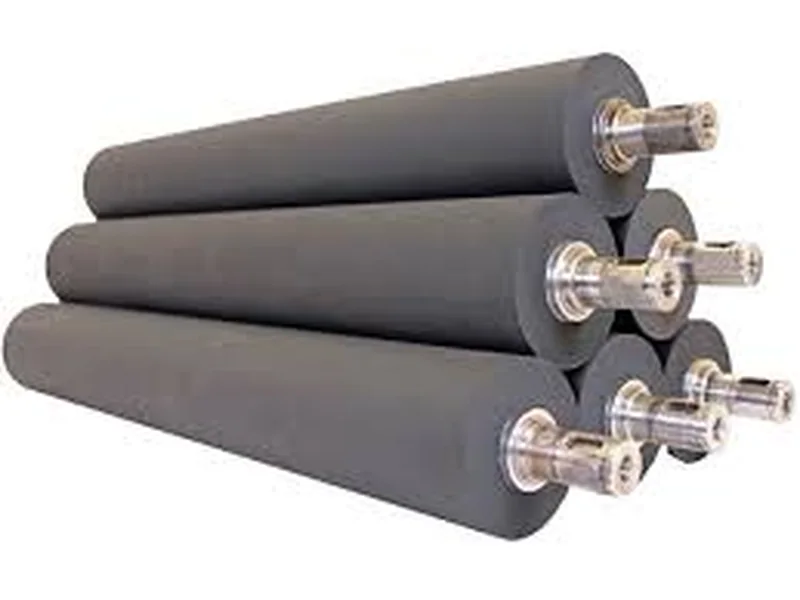
Precision Diamond Cut & Coated Rubber Rollers
A rubber roller consists of a robust inner core (typically seamless steel or aluminum) chemically bonded to an external layer of high-performance elastomer compound.
Mishree Engineers manufactures both plain cylindrical rubber rollers and diamond-cut textured rollers. The diamond pattern creates micro-channels that expel air and moisture, significantly improving mechanical grip and ink/adhesive transfer while preventing delicate materials from slipping or wrinkling.
Technical Specifications
| Core Material | Mild Steel (MS), Carbon Steel, Stainless Steel, or Aluminum Core |
|---|---|
| Rubber Elastomers | Natural Rubber (NR), Nitrile (NBR), Neoprene, EPDM, Silicone |
| Hardness Range | 25 Shore A to 95 Shore A (verified via calibrated durometer) |
| Surface Patterns | Precision ground plain, Diamond cut, Herringbone, Spiral, or Cross grooved |
| Diameter Range | 50mm up to 400mm+ outer diameter |
| Length Capacity | Up to 3200mm face length |
| Concentricity | Finish ground to minimal Total Indicated Runout (TIR) for high speed |
Key Performance Advantages
Where Mishree Engineers Rubber Rollers Excel
Printing & Flexography
Ink transfer, dampening, inking rollers, and impression cylinders requiring uniform fluid application.
Packaging & Film Converting
Nip rollers, pull rollers, and laminating rolls maintaining smooth tension without wrinkling thin plastic webs.
Conveyor Drive Systems
Rubber lagging on drive pulleys to maximize belt grip and prevent slippage in wet or dusty processing environments.
Metalworking & Sheet Guiding
Transporting polished sheet metal, aluminum plates, and painted components without metal-on-metal scratching.
Rubber Roller Questions & Answers
Yes. If your steel or aluminum core is intact, we can strip the deteriorated rubber coating, clean and inspect the metal core, apply fresh bonding primer, vulcanize a new rubber layer, and grind it to your exact original diameter and finish.
Hardness depends on your application: softer durometers (30–50 Shore A) conform well to uneven surfaces and are common in inking/dampening. Medium durometers (55–75 Shore A) are standard for pulling and general conveying. Hard compounds (80–95 Shore A) are chosen for high nip pressures and severe load bearing.
Diamond cut grooves channel out trapped air, oil, or water from between the roller and moving substrate. This prevents hydroplaning, ensures positive belt or sheet tracking, and enhances friction under demanding operational speeds.